Design, Memory, and the Value of Things
Stefano Colli is an architect, designer, teacher, interior designer, and collector deeply committed to circular design and material culture. As the founder and curator of Good Goods — a virtual gallery dedicated to modern design and contemporary authors — he explores the emotional and cultural depth of objects beyond trend and market value.

In this conversation, Colli reflects on why certain pieces endure, how memory shapes perception, and why the true value of furniture lies not in possession, but in connection.
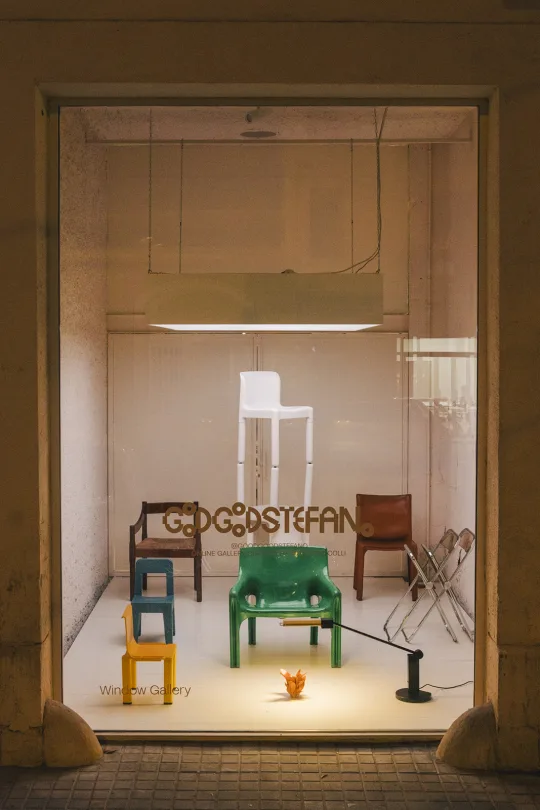
December 2020 @goodgoodstefano press presentation in Window Gallery Barcelona Acid House © photography Leo Garcia Melendez @leocroma
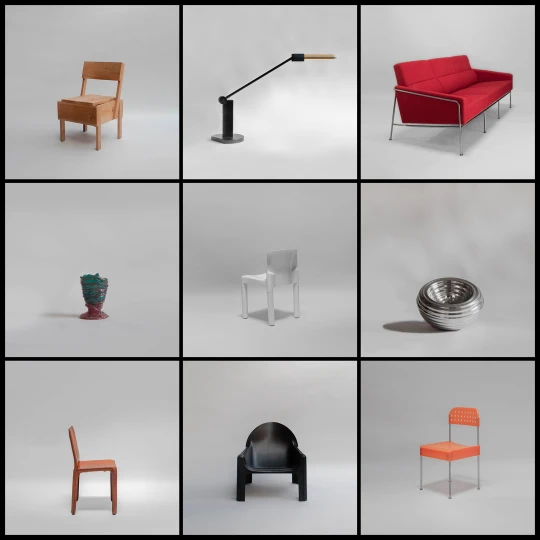
Photo masaic of @goodgoodstefano exemple products on Instagram© photos by Marcello Colli @ivoooory_
How does the legacy of the past influence your work, and what aspects of traditional design remain relevant today?
Stefano Colli: The past is always present. Experience is a kind of subliminal selection — shaped by the people, places, and objects that once moved us, inspired us, or taught us something. In the end, we are what we have lived.
It is essential to understand history and learn from tradition. But we must not become trapped by it. I deeply respect those who create work that speaks clearly to the present, without being constrained by historical weight. We must remain daring. We must remain free to experiment.
Where does the fascination with furniture from the past come from, and how does it differ from contemporary reissues?
Stefano Colli: Some objects transmit cultural value. Their depth can be powerful — even magnetic. They draw you in. But you need a certain sensitivity to perceive that connection; it is not always immediate.
When that depth is imitated or staged, the connection becomes superficial.
In a world where everything can be bought, it is difficult to recognise that cultural value is not simply another marketing attribute. It is something more layered, more complex, more profound.
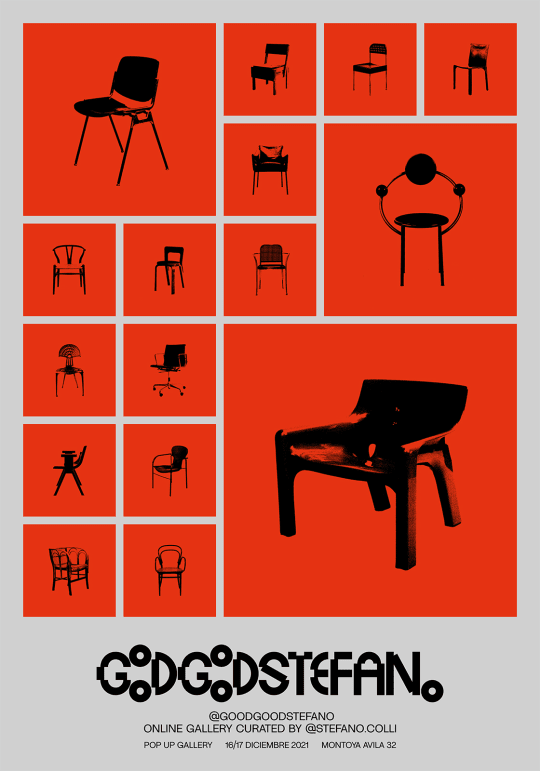
Pasaje Montoya pop up store December 2022
a, b, c … @goodgoodstefano POSTER design © Mucho Branding @wearemucho
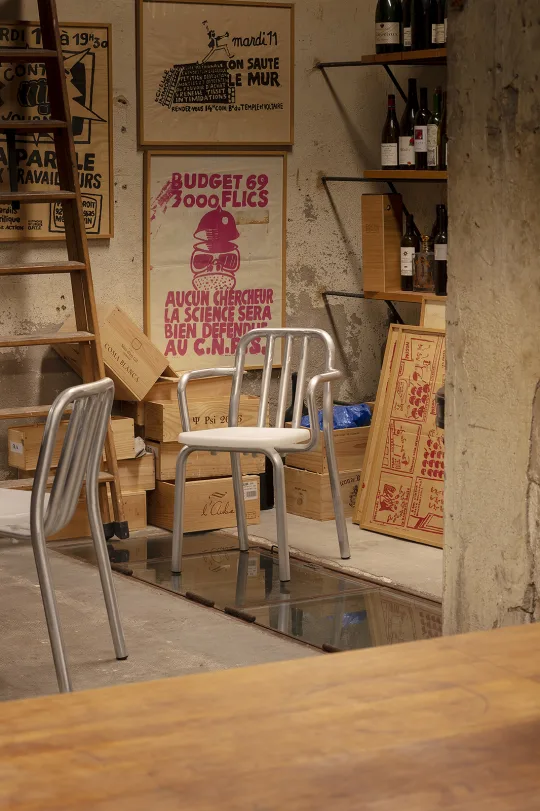
December 2025 @goodgoodstefano collaboration for TUBE CHAIR design for Eugeni Quillet for mobles 114 © photography Meritxell Arjalaguer @meritxellarjalaguer @eugeniquitllet @mobles114
When does a piece of furniture enter the second-hand market with meaning?
Stefano Colli: When a connection is activated.
There is something almost magical in the relationship between a person and an object. The piece we buy or sell carries a story — and that narrative becomes part of its worth. It is preserved, even transformed, over time.
What drives you personally to acquire a piece?
Stefano Colli: Its history. Not only design history or authorship, but its individual journey — the path it has taken before reaching me.
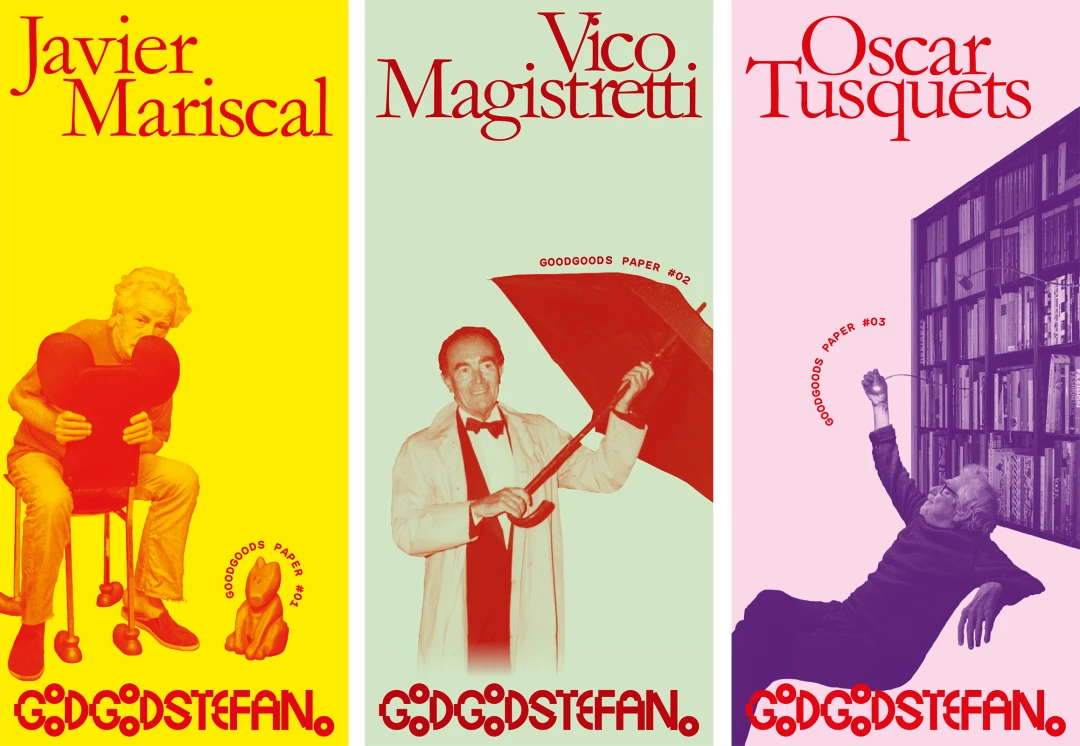
goodgoodspaper #1 Javier Mariscal, #2 Vico Magistretti, #3 Oscar Tusquets, Design © Sergi Vila Bori @sergivilabori
The legacy of well-made objects is something admirable. It carries education. It carries culture.
In your collection, what matters more: cultural or emotional value?
Stefano Colli: The intrinsic culture of a piece fascinates me. But culture and emotion are never entirely separate. They coexist.
Which pieces do you sell, and which would you never part with?
Stefano Colli: I usually buy what I love — and then I sell in order to continue searching. I sell to keep discovering emotions, to pursue beauty, to keep sharing material culture.
Some pieces, however, are too meaningful to leave. Those will remain in my family. They will furnish the homes of my children.
Interview: Cecilia Díaz Betz
Text: Tatjana Bartakovic


