Prostoria and Architecture
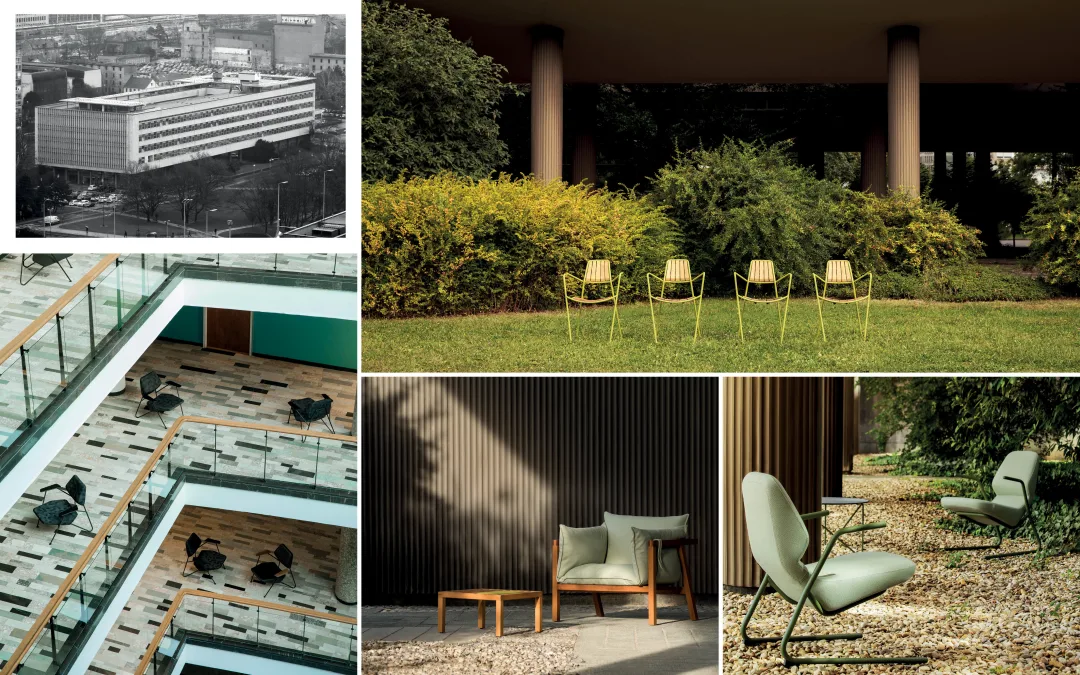
Emerging from Croatia’s modernist heritage, Prostoria draws inspiration from architects such as Vjenceslav Richter, Ivan Vitić, Bernardo Bernardi, Marijan Haberle, and Niko Kralj. Their vision — uniting architecture, design, and art around human experience — continues to inform our approach to furniture, developed with the same attention to use, comfort, and everyday life. Within Zagreb’s modernist culture, architecture, art, and design were understood as parts of a shared system.

“Architecture, art and design are not separate disciplines. In this understanding, objects are not isolated forms but elements of a broader spatial composition. An object has meaning only within a system,” wrote Vjenceslav Richter.
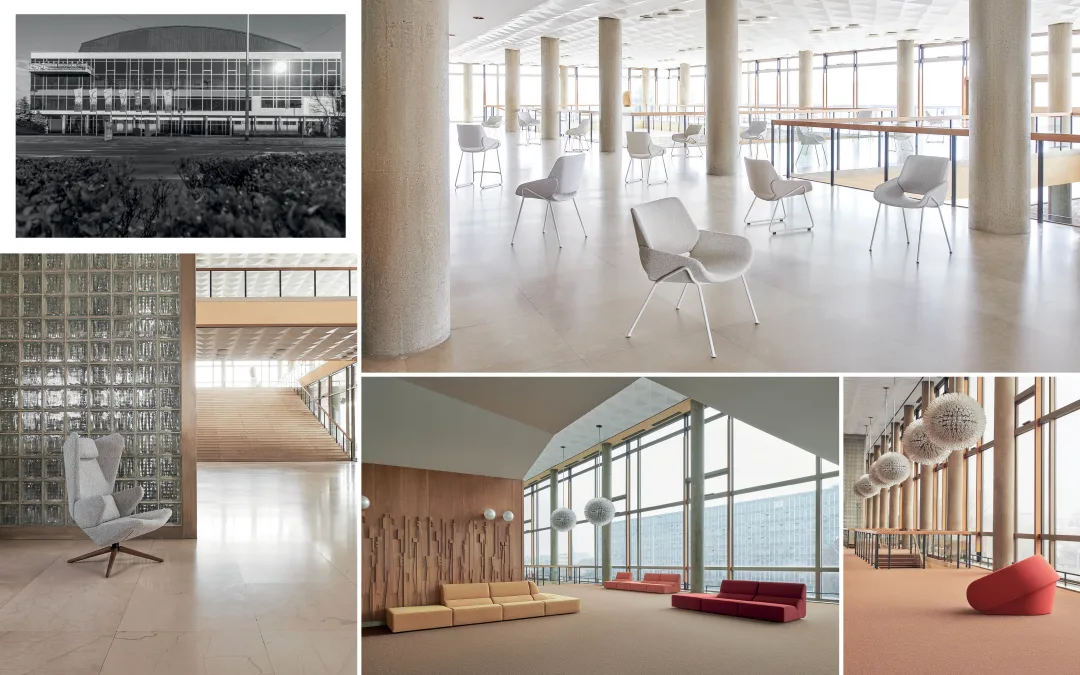
Vatroslav Lisinski: Architecture as a Social Encounter
The Vatroslav Lisinski Concert Hall is organized around the idea of attending a concert as a social event. Instead of a single central foyer, the architects designed a continuous ring of public spaces surrounding the hall, allowing movement, encounters, and views toward the city.
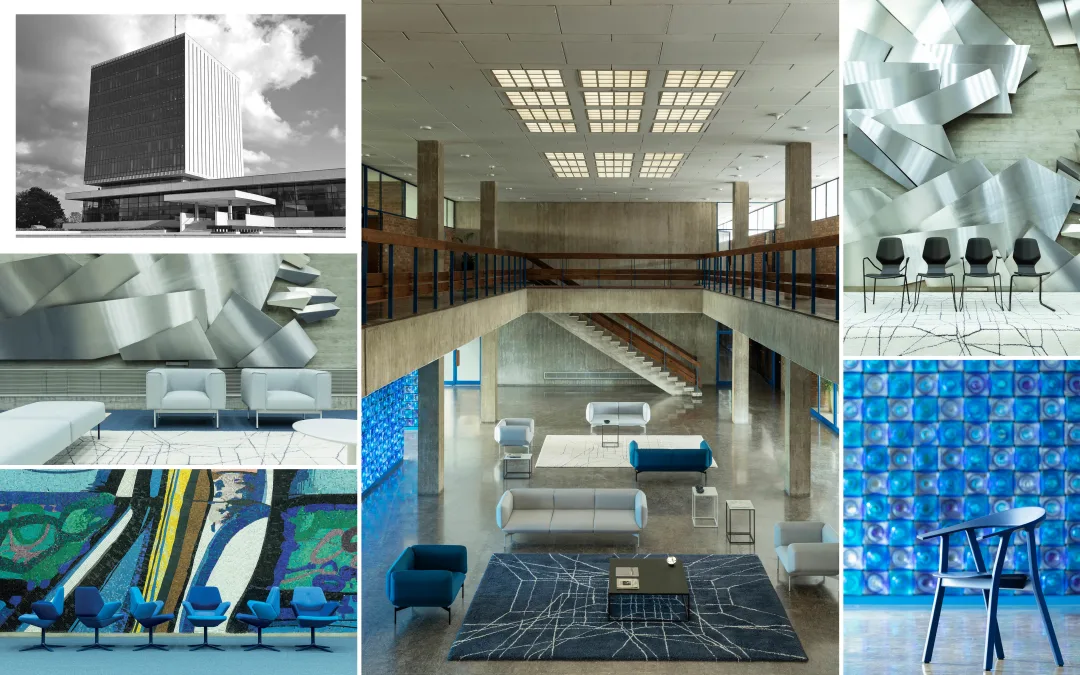
Kockica: The Synthesis of Architecture and Art
The House of Socio-Political Organizations by Ivan Vitić, known as “Kockica,” stands out with its monumental cubic volume and an impressive collection of site-specific artworks integrated into the architecture. Here, art is not decoration but an essential part of the building’s spatial concept.
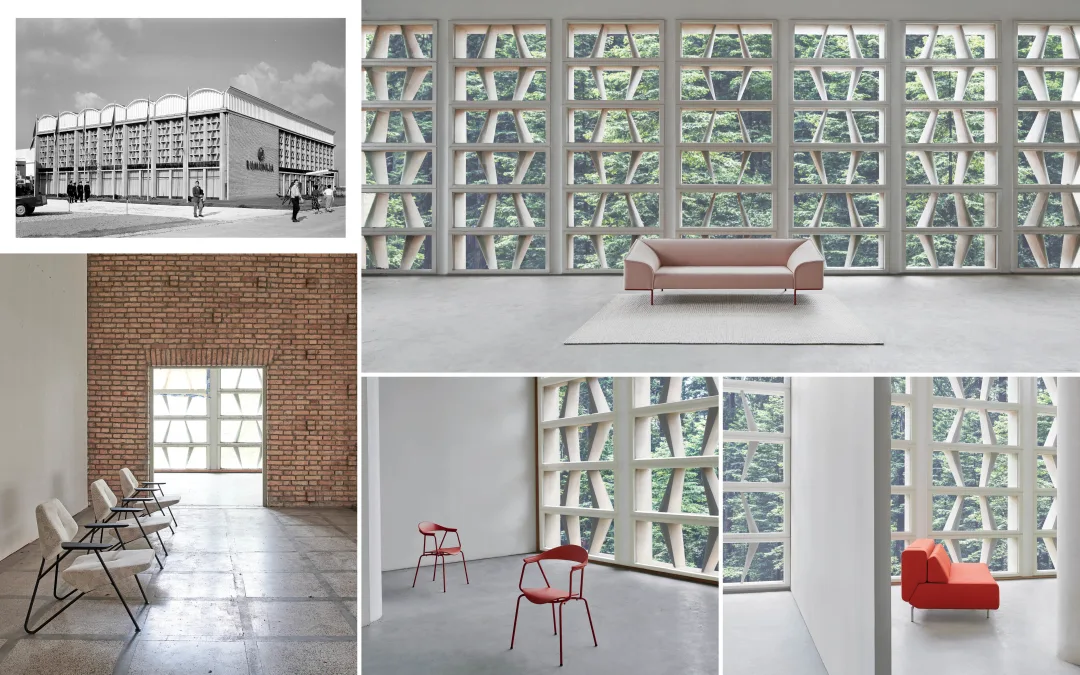
Romanian Pavilion, Zagreb Fair, 1956
Designed by the architect known in Zagreb as Ressu, this compact building is a striking example of early Brutalism. Its dynamic three-dimensional concrete façade contrasts with an unusually complex interior composed of interconnected spaces of varying proportions, whose spatial richness has made it a fitting setting for numerous art and design exhibitions, including those by Zagreb’s Museum of Contemporary Art.
Workers’ and People’s University: Interior as an Inner City
The Workers’ and People’s University building was conceived as a network of interior “streets,” staircases, and galleries that encourage movement and interaction among users. The interior functions as a three-dimensional composition in which architecture, space, and furniture form a coherent whole.
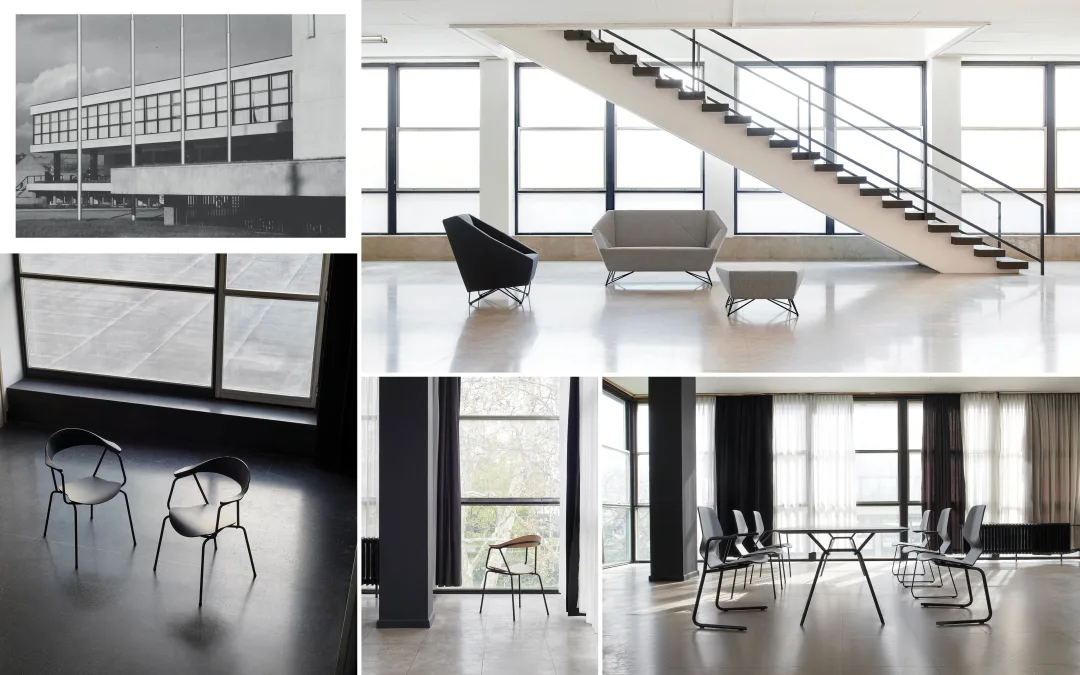
Furniture Within Architectural Space
Within such environments, furniture becomes part of the architectural composition. Chairs, sofas, and tables shape how people inhabit space — how they sit, meet, and move through it.
For this reason, contemporary objects placed within these interiors do not appear as references to the past. Instead, they act as a natural extension of an architecture conceived from the outset as a system of relationships between space, objects, and people.