Polygon and the Freedom of Modernism
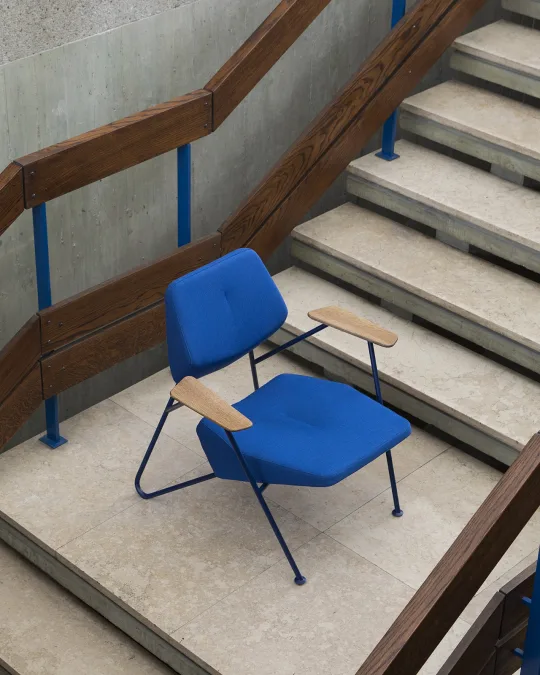
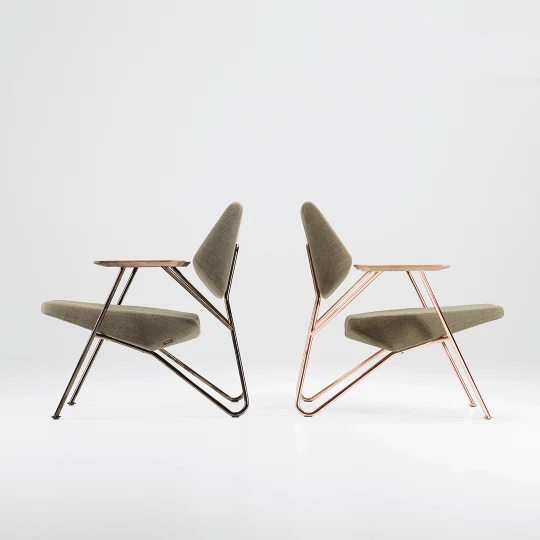
Polygon emerged at a moment when Prostoria was defining its identity beyond function, seeking a clearer design language rooted in structure, comfort, and cultural continuity. Reflecting the brand’s early spirit of research and openness to new forms, the chair questions conventions and expands the language of upholstered furniture.

Designed by Numen / For Use in close dialogue with Prostoria’s in-house research and production, Polygon draws from modernist values while fully embracing contemporary technologies of making.
Though never conceived as an object of spectacle, it gradually established itself as a design icon — an object shaped by the logic of the human body and by a humanistic approach to modernism that seeks to infuse a sense of soul into serially produced objects.
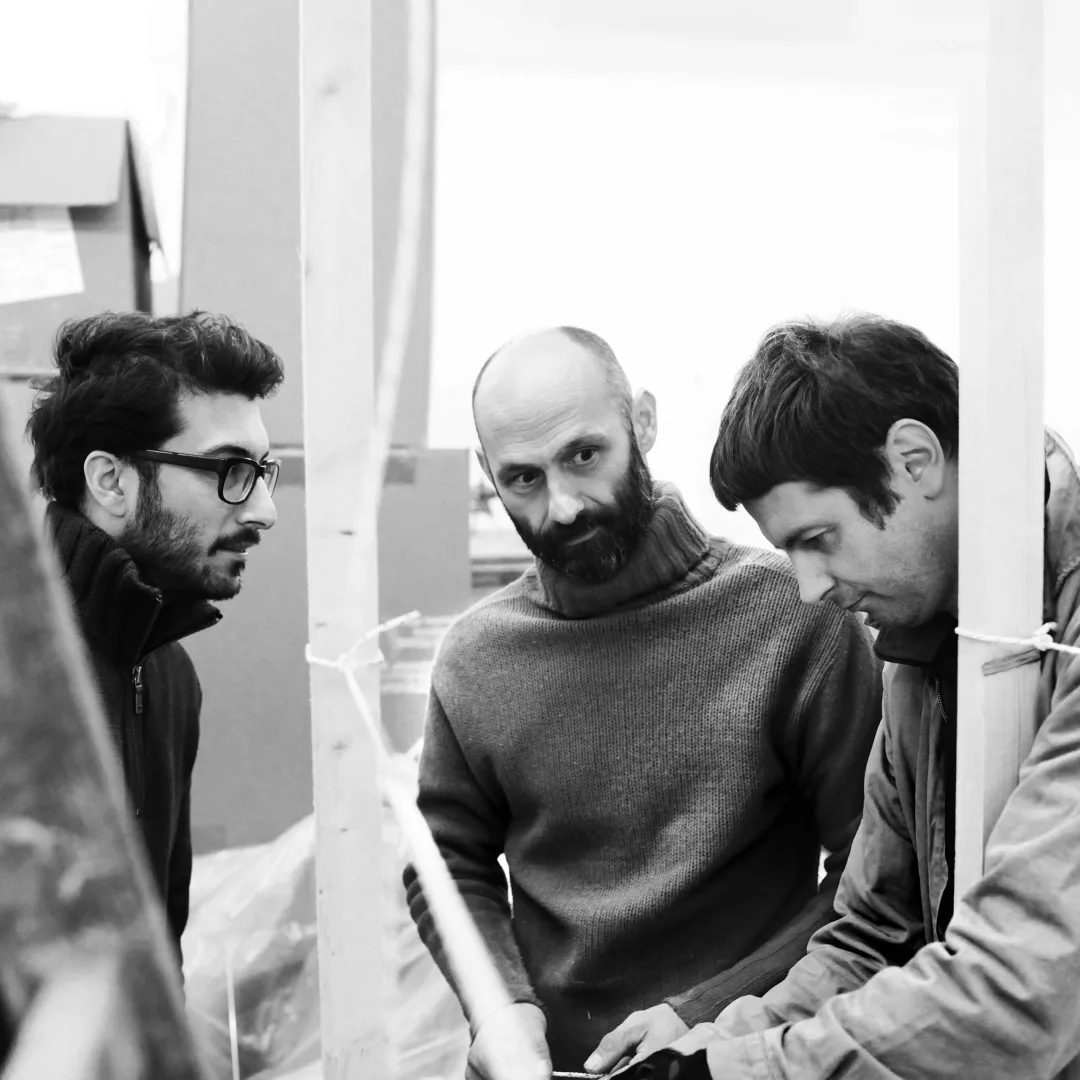
NUMEN / FOR USE
Articulating a Design Attitude
Before thinking about form, what felt missing in Prostoria’s early collection — and why did a chair like Polygon feel necessary?
Numen/ForUse: At that stage, Prostoria had already established itself through functionality and innovation, but what was missing was a clearer cultural positioning.
A Humanistic Modernism
Modernism is often mentioned in relation to Polygon, but never in a literal or nostalgic way. What kind of modernism were you engaging with?
Numen/ForUse: Modernism is often reduced to slogans like “form follows function” or “less is more,” which tend to obscure its fundamentally humanistic and emancipatory foundations. Its origins lie in a critique of the inhumanity of the industrial age and in an attempt to rediscover — or infuse — a sense of soul into serially produced objects.
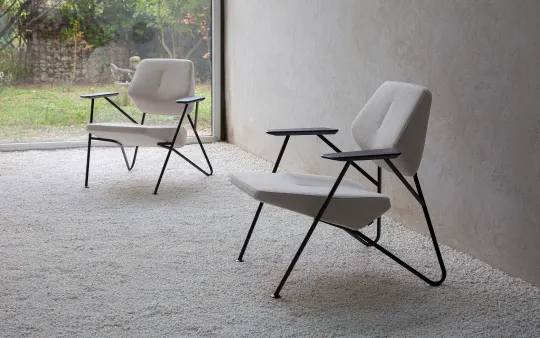
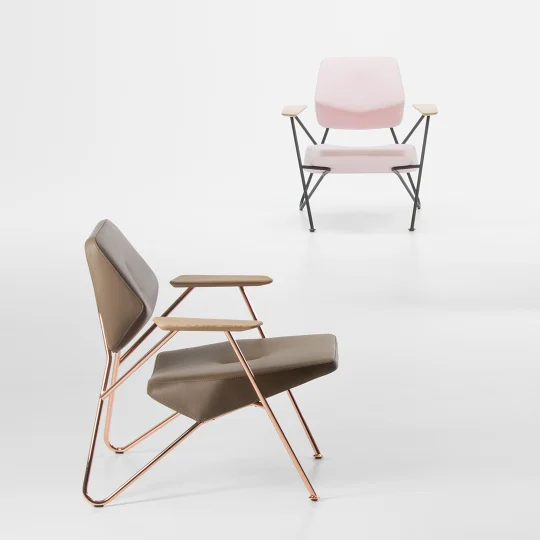
With Polygon, we aimed to keep the chair compact while achieving a high level of seating comfort. We reduced the number of elements, but allowed the form to remain playful and expressive, striving to reach a point where nothing needed to be added or taken away.
Origins and Lineages
When you began designing Polygon, what came first: a remembered object, a spatial idea, or a constructional problem?
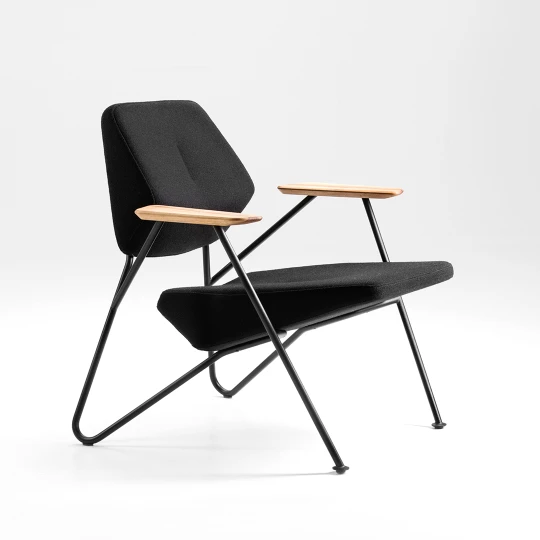
Numen/ForUse: The initial reference was the wide, voluminous armrests of the Lupina chair by Slovenian designer Niko Kralj. From there, the steel structure evolved through a search for a continuous spatial line, which ultimately defined the polygonal geometry of the seat and armrests. Only a few years after Polygon was designed, we recognised an unexpected resonance with Vjenceslav Richter’s 1952 chair — not in typology or technology, but in angularity and proportion — suggesting a shared design lineage that emerged unconsciously.

Beyond Orthogonality
Polygon clearly departs from the orthogonal logic of classic seating. Why was it important for the chair to unfold fully into space?
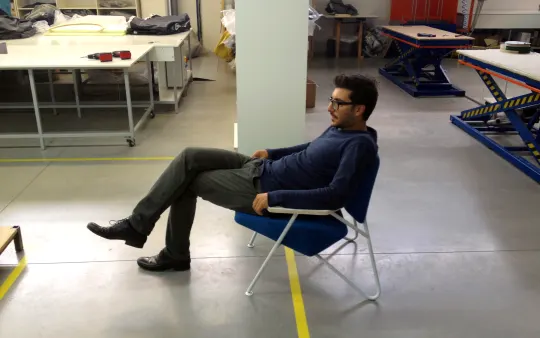
Numen/ForUse: Seating is rarely orthogonal, largely because of the complexity of human anatomy. Chairs were traditionally designed with mirrored sides, but with CNC bending and moulded cold foam, there is no longer a reason to reduce form to an extruded profile.
Polygon is simply a straightforward illustration of this technological shift.
Structure as Expression
In Polygon, the structure is not hidden — it becomes the chair itself. How did construction evolve into an expressive tool?
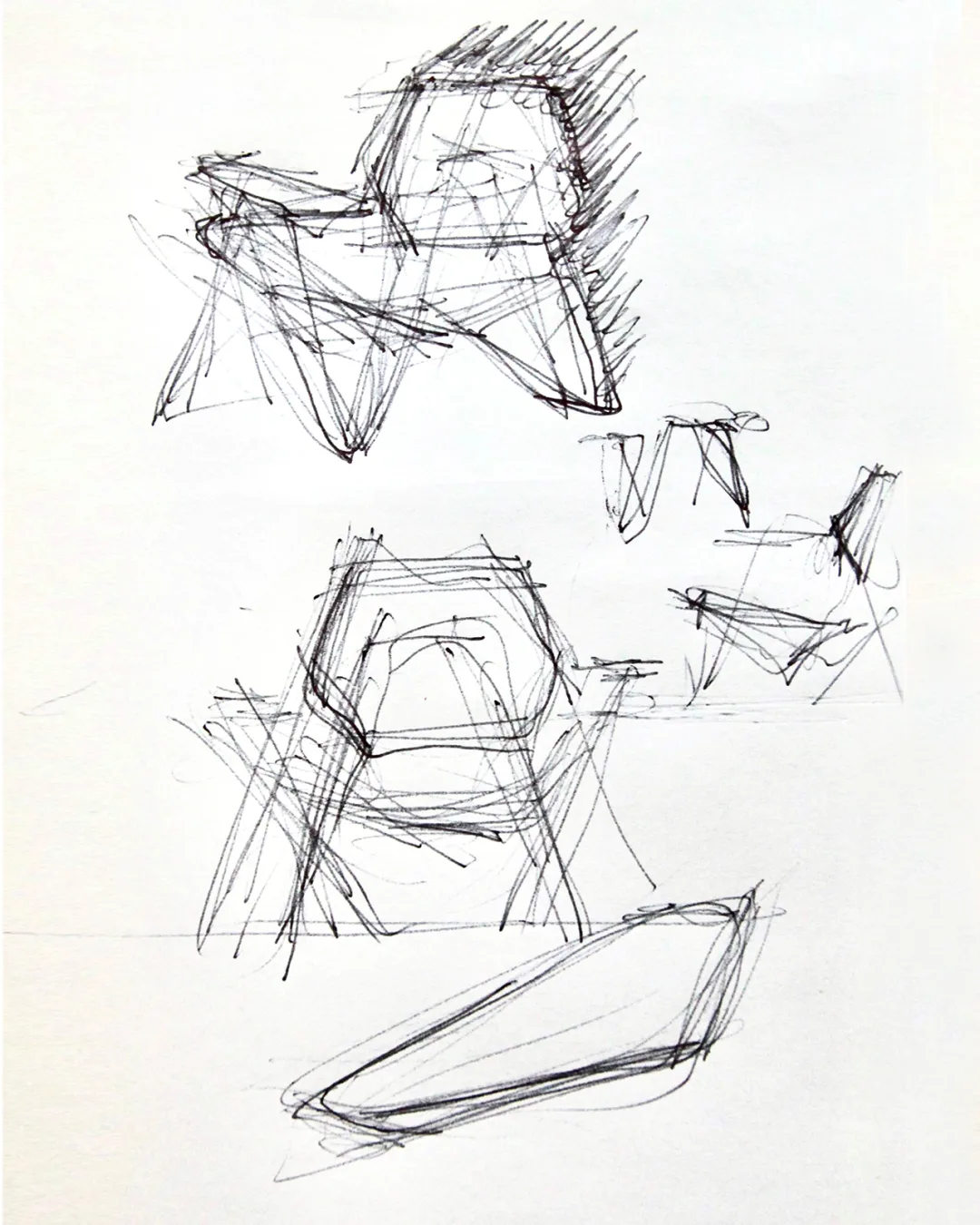
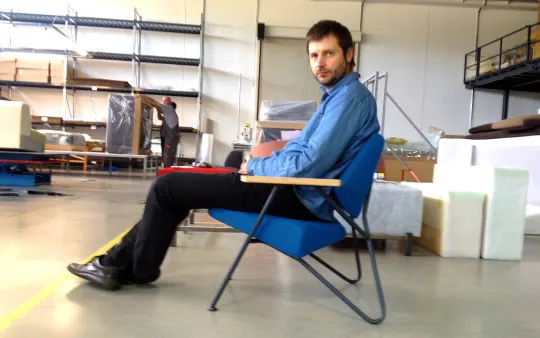
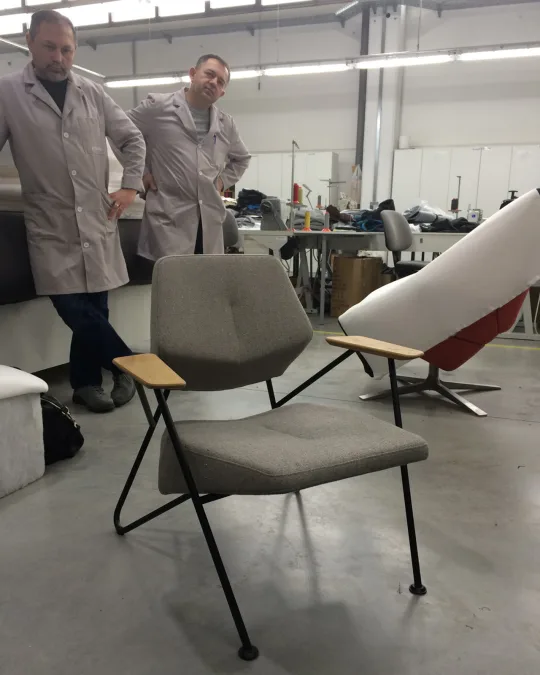
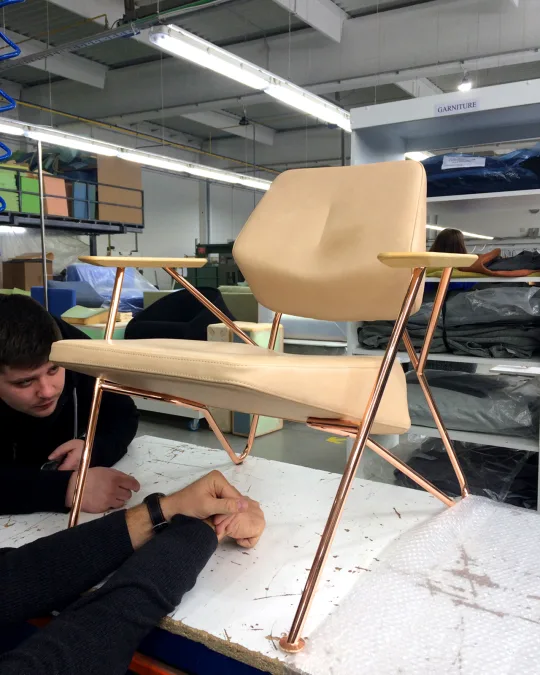
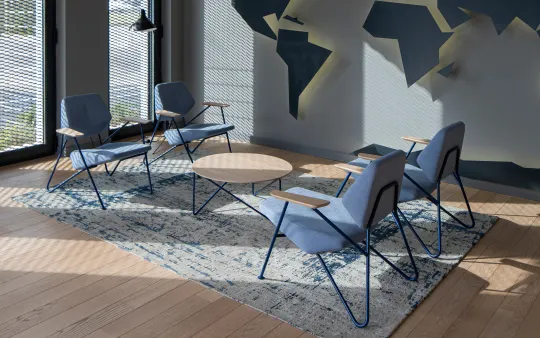
Numen/ForUse: We always treat structure as an equally important element of an object, alongside volume. In Polygon, the structure became a kind of spatial drawing — a three-dimensional line connecting points of interest such as the tips of the legs and the junctions with the seat and backrest.
It was never about exposing construction for its own sake, but about allowing it to participate fully in the overall expression.
Designing with the Factory
Polygon evolved alongside Prostoria’s production capabilities. How did in-house development shape the final design?
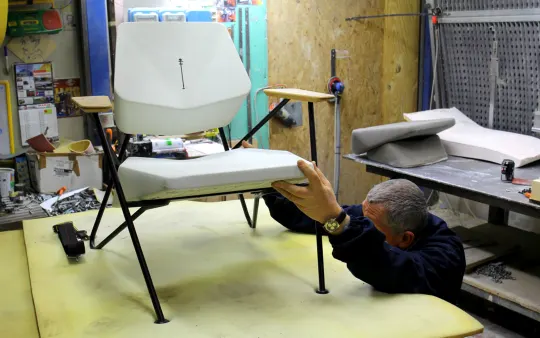
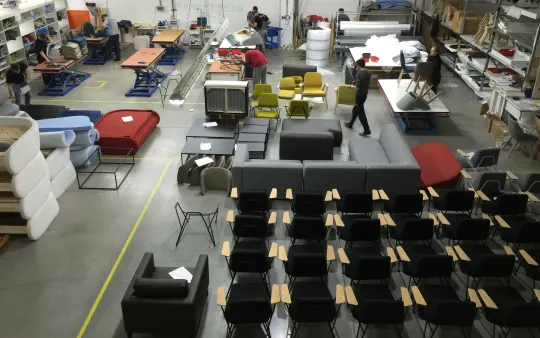
Numen/ForUse: The design evolved in parallel with Prostoria’s manufacturing capabilities. When 3D CNC milling became available, we refined the details; when moulded cold foam was introduced, we redesigned the upholstered parts.
An interesting aspect is that the seat itself — due to the internal metal reinforcement within the foam — became part of the structure, connecting the two visible metal sides. At that point, the boundary between structure and upholstery effectively disappeared.
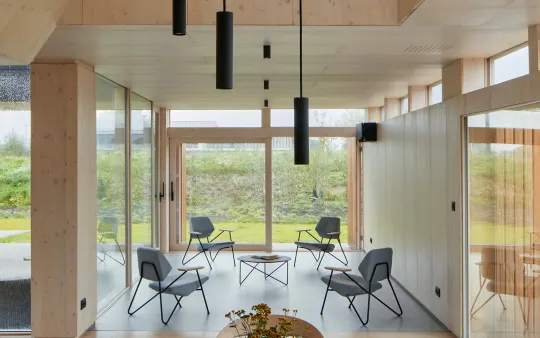
Comfort, Perception, and Time
Polygon appears precise and analytical, yet it remains comfortable and adaptable across contexts. How do you understand its comfort and longevity today?
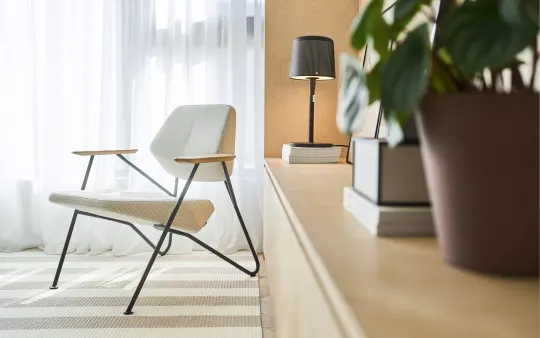
Numen/ForUse: The advantage of upholstered furniture lies in the behaviour of foam, which adapts to the human body. If the internal hard structure is positioned correctly and the foam density is carefully chosen, even a visually sharp form can provide genuine comfort. Achieving that balance requires experience, prototyping, and a certain sensitivity developed through making.
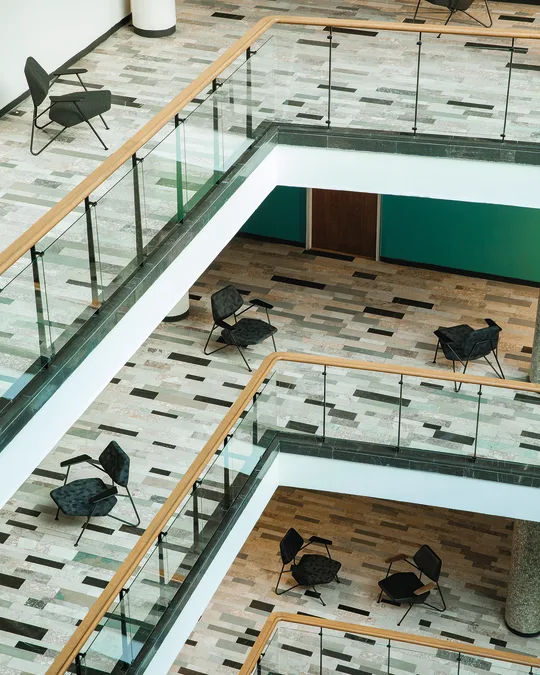
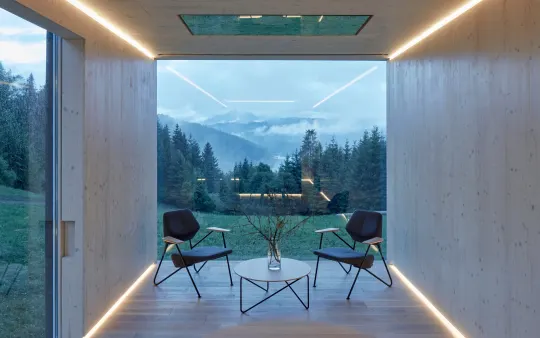
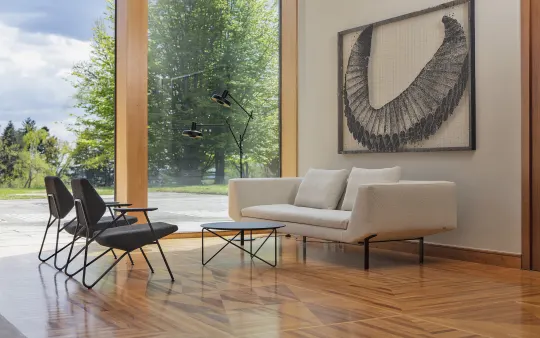
From different viewpoints, Polygon almost becomes a different object. This perceptual flexibility allows it to adapt easily to domestic, public, and hospitality interiors. Although it was not an instant commercial success, both we and the Prostoria team sensed early on that it was an important piece. Two years later, it became Prostoria’s bestseller — and it has remained so ever since.
Looking at it today, Polygon represents a moment when design, production, and trust aligned — not just a chair, but a shared attitude that remains open-ended.
Text and interview by Tatjana Bartakovic


